
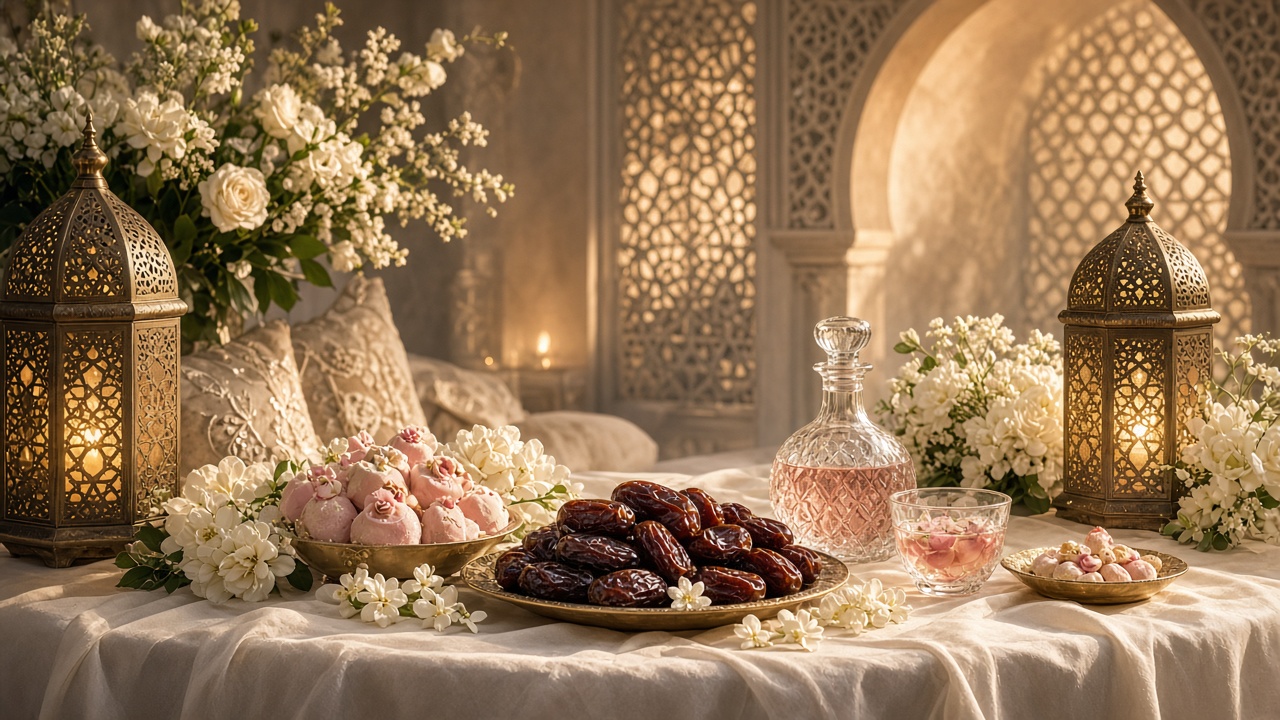
Most of this site is about the unseen: what the Quran teaches about the jinn, and the folklore that grew up around them. But Islamic teaching is above all about how people live together, and few moments bring a community together like a marriage. Families planning a nikah and walima often ask what the tradition actually says about invitations: who to invite, whether guests must come, and how simple or grand it should be. Here is a calm overview, with the usual reminder to ask a trusted local scholar about your own circumstances.
The nikah and the walima
The nikah is the marriage contract itself: the offer and acceptance, the agreed mahr, and witnesses. It can be small and held at home or in a masjid. The walima is the wedding meal that follows, hosted to share the joy of the marriage and to make it known in the community. Announcing a marriage publicly, rather than keeping it secret, is itself part of the tradition.
The walima is a Sunnah, even when modest
In a well known narration in Sahih al-Bukhari, when Abdur Rahman ibn Awf told the Prophet (peace be upon him) that he had married, the Prophet told him to give a walima, even if only with one sheep. Scholars draw from this that the walima is a confirmed Sunnah, and that its value lies in the sharing, not the expense. A walima of rice and curry for neighbors fulfils the purpose as fully as a banquet in a hall.
Guests are encouraged to accept
Also in Sahih al-Bukhari, the Prophet said that when one of you is invited to a wedding banquet, he should attend. Many scholars therefore hold that answering a walima invitation is obligatory or very strongly encouraged, unless there is a valid excuse such as illness, distance or something impermissible at the event. For the host, this means the invitation is not a casual thing. It is an honor offered, and the guest is asked to honor it in return.
Do not leave out the poor
One narration is especially relevant to invitation lists. Abu Hurairah reported that the worst food is the food of a wedding banquet to which the rich are invited and the poor are left out. The lesson is clear: a walima list should not be built around status. Include neighbors, the elderly, students far from home and families who are struggling, alongside relatives and friends.
Practical guidance for families today
- Keep the nikah simple and focus effort on making the walima welcoming.
- Invite clearly. State the date, time, place and whether the event is for families, men and women separately, or both, so guests can come without awkwardness.
- Ask for numbers, so food is not wasted. Wastefulness is discouraged, and a head count is a small kindness to the cook.
- Avoid excess. Debt and display are not part of the Sunnah of the walima.
- Remember those who cannot attend, and send food to them where possible.
A note on how invitations are sent now
Families spread across cities and countries now often send one invitation link by text or WhatsApp, which makes it easy to include everyone and to collect a head count. If you want a dignified digital card, Glidvite makes animated nikah and walima invitations with RSVP, at one price however many guests you invite, so a generous list does not cost more. Whatever form your invitation takes, the tradition's priorities stay the same: announce the marriage, share the meal, and leave no one out.
And Allah knows best.